
Long before the bubbles, Reims was called Durocortorum and ranked among the great cities of Roman Gaul. The Romans left behind an outsized triumphal arch, a gallery beneath the forum, marble tombs, and two things without which Champagne would not exist as we know it: the chalk quarries that became cellars, and the vine. Here is where to see Roman Reims, and how it leads straight to the Champagne houses.
Durocortorum, capital of Gallia Belgica
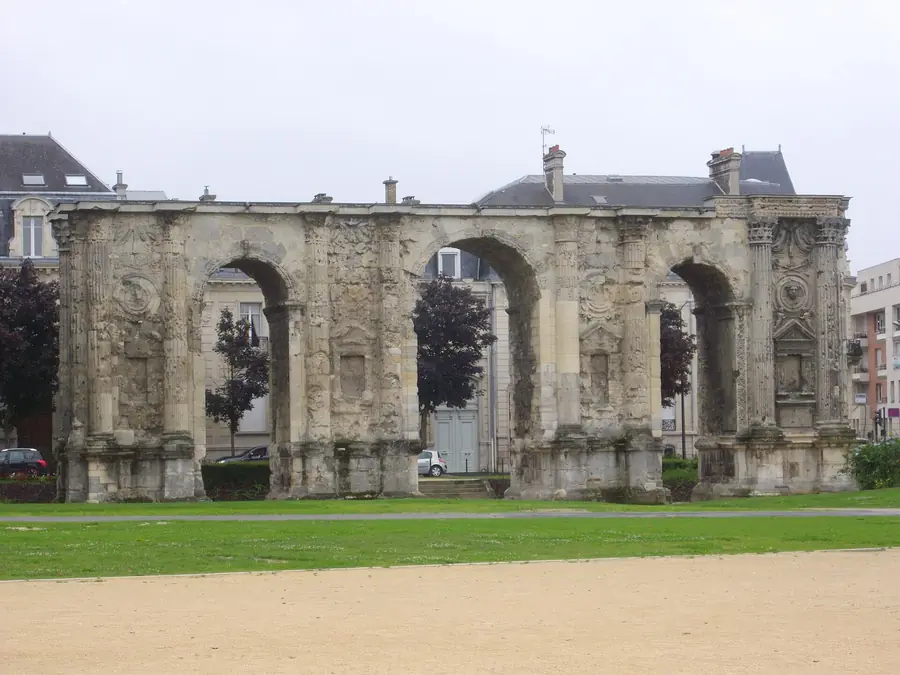
The Remi, the Gallic people who gave the city its name, sided with Rome early on. Under Augustus their city became the capital of the province of Gallia Belgica. Of that Roman splendor, one monument still stands north of the center: the Porte de Mars, a 3rd-century triumphal arch and the oldest monument in Reims. With three arches spread over 33 meters and a height of 13 meters, it was the widest arch in the entire Roman world. Look up under the vaults: the carved reliefs, including scenes of farm work, can still be made out.
Beneath the Place du Forum, the cryptoporticus
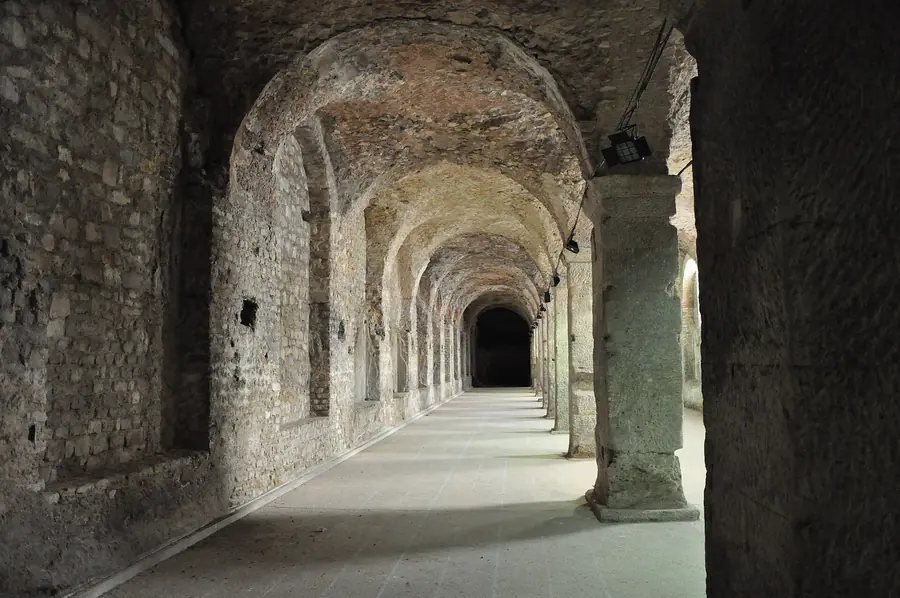
In the heart of the city, a few meters below the Place du Forum, a long vaulted gallery survives half underground: the cryptoporticus. It was one of three wings of a much larger complex, the forum of Durocortorum, the main public square of the Roman city. It opens in season, in the afternoon, and entry is free; check the dates before you go, as it closes for the rest of the year.
The Saint-Remi Museum and the tomb of Jovinus
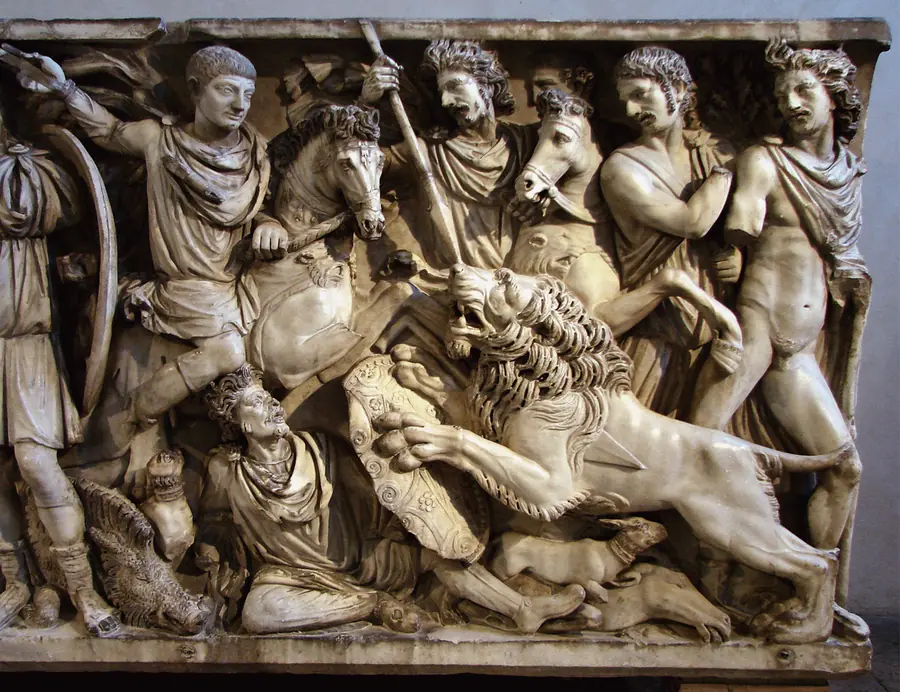
The Gallo-Roman collections of Reims are gathered at the Saint-Remi Museum, in the former abbey next to the basilica. The centerpiece is the marble sarcophagus of Flavius Jovinus, a Roman general and consul, one of the finest ancient tombs preserved in France, carved with a lion hunt. The mosaics show daily life and beliefs in the Roman city. The museum opens 10 a.m. to 6 p.m., closed on Mondays; full price is €5.50 (official site).
The crayères: Roman quarries turned into cellars
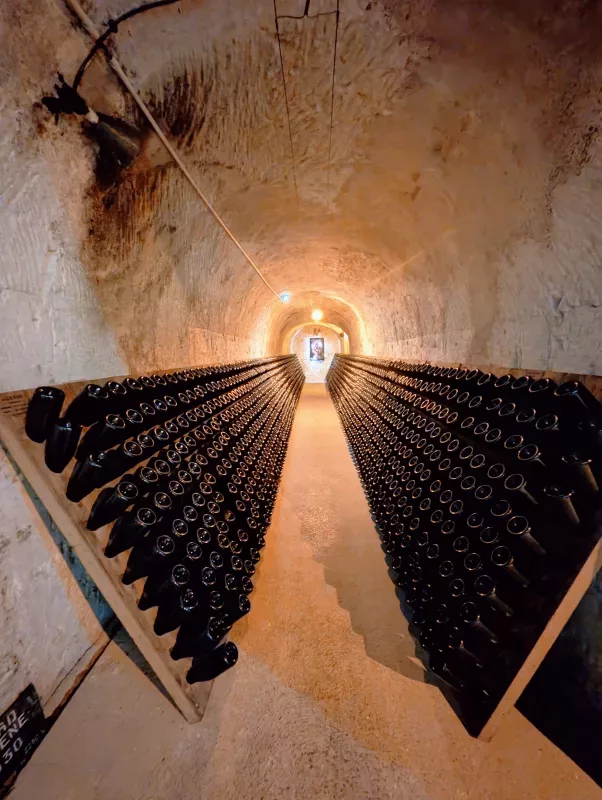
To build their city, the Gallo-Romans quarried the chalk beneath it, from the 4th century on, digging deep bell-shaped pits: the crayères. Centuries later, the Champagne houses linked them with galleries and made them their cellars, because chalk keeps a cool temperature and steady humidity all year round, ideal for wine. At Taittinger, the crayères open beneath the former Saint-Nicaise abbey; at Pommery, 116 steps take you down to the pits, some thirty meters underground. These cellars are part of the "Champagne Hillsides, Houses and Cellars" site listed by UNESCO in 2015.
From the Roman vine to the monks' clos
The vine reached Champagne in Gallo-Roman times. It only truly took off in the 4th century, as vineyards in northern Gaul developed later than in the south. Along the way, history hesitated: around the year 92, Emperor Domitian ordered part of the provinces' vines uprooted to protect Italian wine; two centuries later, Probus, who reigned from 276 to 282, gave the Gauls back the right to plant everywhere.
After Rome, it was the abbeys that kept and organized the vineyards. The clos, plots enclosed by walls, come from them: the Clos du Mesnil, on the Côte des Blancs, belonged to a Benedictine abbey and was already walled in 1698. Sparkling Champagne, for its part, only appeared in the 17th and 18th centuries. So the Romans did not invent Champagne, but they planted the vine and dug the cellars where it rests today.
A French king dressed as a Roman emperor
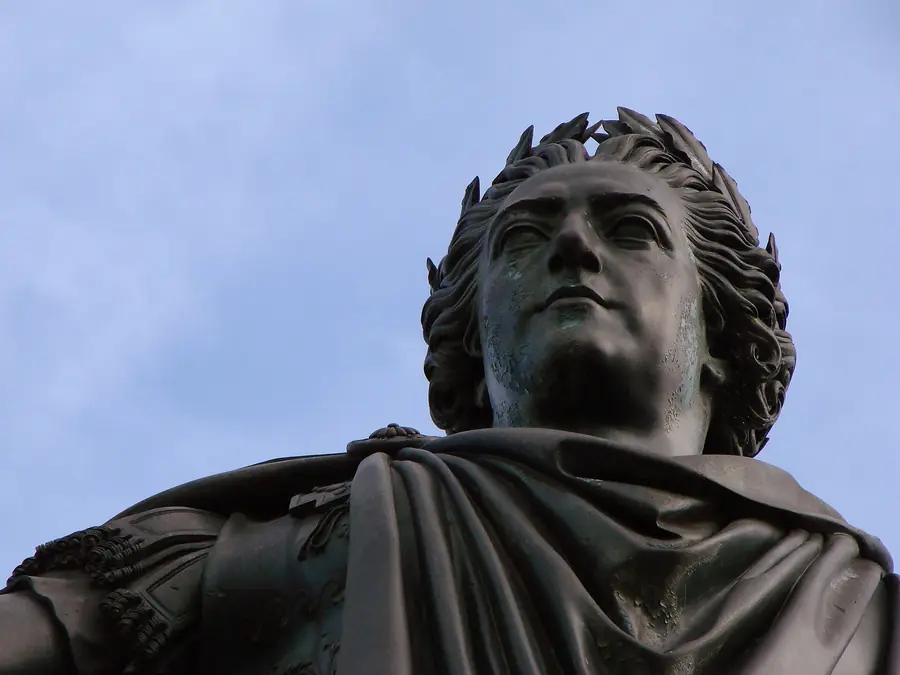
One last surprise, and not a small one: on the Place Royale, Louis XV stands as a Roman emperor, draped in a toga and crowned with laurels. The city commissioned the statue from the sculptor Jean-Baptiste Pigalle and unveiled it in 1765, the king holding out his hand to "take the people under his protection." The bronze was destroyed during the Revolution; Pierre Cartellier cast a new one in 1818-1819, still in Roman dress, while Pigalle's figures on the pedestal were preserved.

A Roman half-day, with or without Champagne
The Porte de Mars, the Place Royale and the cryptoporticus are an hour's walk in the center. The Saint-Remi Museum and the crayères of the nearby Saint-Nicaise hill lie further south: that is where a car saves time. The natural ending is a cellar, going from the Roman quarry to the glass.
Porte de Mars and Place Royale
The 3rd-century arch, then Louis XV as a Roman emperor. Free, visible at any time.
Saint-Remi Museum
The tomb of Jovinus and the mosaics. 10 a.m. to 6 p.m., closed Mondays, €5.50.
A crayère
Down into a Gallo-Roman quarry turned cellar, with a tasting paid at the house.
Our UNESCO crayères tour makes that descent in a half-day, from €280 (~$315 USD) per vehicle. For a full day that runs from the Romans to the coronation of kings, see Coronations and chalk cellars.
Your questions about Roman Reims
Does Champagne owe its origins to the Romans?
Partly. They brought the vine to Champagne in Gallo-Roman times and dug the chalk quarries that now serve as cellars. Sparkling Champagne itself only appeared in the 17th and 18th centuries.
What is a crayère?
A chalk pit dug from the 4th century on by the Gallo-Romans to quarry the stone that built Reims. The Champagne houses linked them into cellars, since chalk keeps a steady temperature and humidity.
Why is Louis XV dressed as a Roman emperor?
It was how a monarch was celebrated in the 18th century. Pigalle's statue, unveiled in 1765, was destroyed during the Revolution, then recast by Cartellier in 1818-1819 in the same ancient dress.
How long does it take to see Roman Reims?
A half-day is enough: an hour on foot for the Porte de Mars, the Place Royale and the cryptoporticus, then the Saint-Remi Museum and a crayère in the south of the city.
Do the Champagne clos come from the Romans?
No. The clos, vineyards enclosed by walls, are mostly the work of the abbeys after Roman times. The Clos du Mesnil, owned by a Benedictine abbey, was already walled in 1698.